
THE UNDERBELLY OF THE BEAST - a piece of creative reportage from the year 2000
I could swear the world is flat when I fly into Houston. Speeding towards the dusk, hundreds of Texan miles rolling out smooth and green below, the sun looks like it’s fallen clean off the edge of the planet.
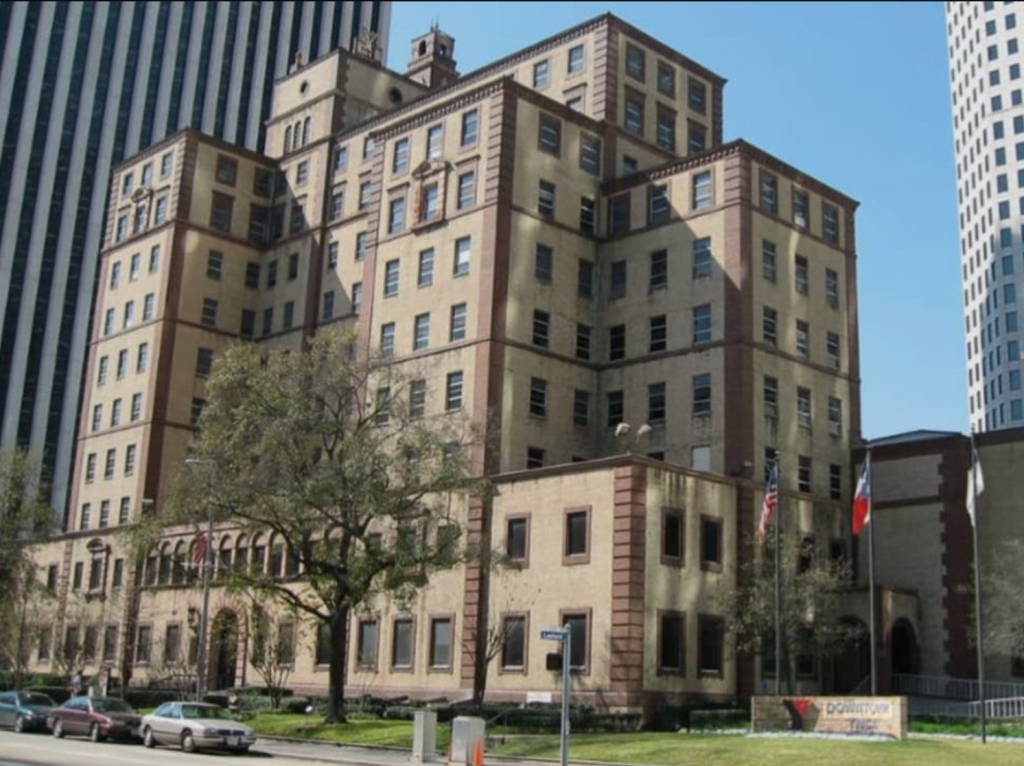
It’s dark as the plane lands, and the skyscrapers of Downtown glow like a mirage in the distance. When the minibus drops us off, the city centre is deserted and eerie. Mockingbirds whistle from twisty oaks lining the street, and it’s like walking through a dream as I find my way to the YMCA, a 10-storey 1940s block that’s been dwarfed over the decades by futuristic buildings up to seven times its height.
Upstairs, my room is furnished with a fridge and a TV but has no coat hangers. A hard single bed is covered by a knitted blanket and a sheet with cigarette burns in it. Out of the window I look down the street into a massive porthole about an eighth of the way up a vast blue neon-lit building and notice, to its left, a disused revolving restaurant, circa 1960, now surrealistically redundant among the newer, taller towers.
Four miles of air-conditioned tunnels run beneath downtown Houston. Next morning, smart commuters march briskly along the streets before vanishing underground – it’s late February and temperatures are already hitting the 80s. Venturing after the workers, I enter the lobby of a shiny office block, but going down the escalator, I find myself alone in what seems like a basement. Broom cupboards and tiny archaic offices line a winding corridor which eventually leads to a cavernous canteen serving French toast and waffles.
Back above ground, at the intersection of Main and Prairie to the north of Downtown, the landscape opens out and I’m struck by how impoverished people are. Young and old, they gather at bus stops, ragged, shuffling and wild-eyed, looking poor in a way I’ve never seen in Europe. Towards the smart new courthouse, it’s still more desolate. A lone hotel, the Lonsdale, stands in apocalyptic isolation. Scarily seedy, it looks like a clapboard facade from the set of a Western.
Texas was an independent country until 1845 and in many ways the frontier mentality lives on. For a lawman, prosecuting capital cases is a political necessity – the state has the busiest Death Row in America, and a third of the inmates come from Houston. The city’s retiring District Attorney, Johnny Holmes, is notorious for prosecuting dozens of them personally. A bulging man with a long white walrus moustache, he’s also famous for dressing in full cowboy regalia, complete with Stetson, side arm, trench coat and boots – a living embodiment of the Old Law of the West.
Driving back into town one evening, I turn off the Interstate to meet a woman whose son is on Death Row. A little outside the city limits, Louella lives in a blue and white wooden house on a long, empty road just behind the railway track. When she hears me pull up, she calls:
“Rebecca, is that you?”, then hobbles to flip the catch on the flimsy side door. Despite her girly cotton print-dress, she is a strangely camp-looking woman. With brown skin stretched tight across a battered face, she has a Haitian look and the biggest, most beautiful eyes I’ve ever seen.
We haven’t met before, but Louella’s happy and excited because I’ve been to see her son – without a car she’s rarely able to go herself. Isolated and ill with Hepatitis C and diabetes, she speaks in long streams of consciousness about “her baby” – she seems to be keeping herself alive with the thought that her son is coming home one day.
As we talk, though, a contender in the race for the new DA comes on TV. Chuck Rosenthal strides forth like an avenging angel, declaring war on crime and asserting his own get-tough credentials – he’s already sent 14 people to Death Row – “where they belong”.
“Send people to death row where they belong?” Louella mutters, bewildered, wounded, crushed. How often has she been tormented by Chuck’s boast as she sits alone, trying to convince herself things will turn out alright? Later, she hunts around for something to give me, eventually pulling a desk diary from a shelf. “Girlfriend! I ain’t got no desk so I don’t need no diary!” she insists. It’s twilight when I go. She stands among the flowers in her front garden and waves sedately.
Back at the Y, there are men with limbs missing, women with no hair and people with all manner of afflictions. But although they look strange to me, I soon realise I must seem even stranger to them – they don’t understand my accent and think I must be French.
When I say I’m from London, a young lad says: “Isn’t that where they’ve got that big tower?”
‘The Tower of London’, I puzzle. ‘Canary Wharf?’ But no, he means the Eiffel Tower.
He’s embarrassed when he realises his mistake. “France is near England, right?”
Saturday. There’s been torrential rain and the temperature has fallen 20 degrees overnight. High winds cannon between the soaring buildings and, as the tunnels are shut at the weekend, I have to struggle half-a-mile to the post office overground, my body pitched against the force of the gusts. The skies are clear, though, so I catch a bus to my next appointment. The friendly driver drops me just beyond the busy I-45 flyover that borders Downtown. A stone’s throw from the shimmering space-age island, the road is muddy, pot-holed and lined with shacks.
On my last day, Clarence Brandley comes to see me at the YMCA. A one-time resident there himself, he spent nearly 10 years on Death Row for the rape and murder of a white woman, before an international campaign found evidence that judges had plotted with the prosecution to have him sentenced to death while two white men who confessed their guilt were never arrested. The death penalty in Texas grew out of racist lynchings and with Clarence, as with so much in this ghostly place, spectres of the past seem ever-present. In an experience more reminiscent of the 1930s than the 1980s he was told: “You’re the nigger, so you’re elected.”
The coach to Mississippi leaves at midnight so I go to recce the Greyhound station. It’s scary: gang-types loiter outside, apparently looking for people to rob. I opt to sit out my last seven hours in the lobby of the Y. As I wait, I wonder where the humanity is in this city of deserted streets, down-and-outs and Davy Crockett-style DAs. For a couple of hours I find it, in a nearby Japanese restaurant where tables are shared between strangers, and jokey acrobatic waiters juggle the dishes to entertain us. Next to me, a young couple are beginning a birthday night out and invite me to join them. We eat and laugh, and after 90 minutes pay up and go our separate ways. Back at the Y, though, my bonhomie is quick to fade. The lobby’s empty tonight, but at 11.10pm a large white-haired woman comes down in her nighty and talks to her daughter on the phone. She tells her she has cancer and that it’s spreading towards her brain.